LOC19:15
16:15 GMT
 Rare fossils of a horseshoe crab dating back approximately 465 million years
JEDDAH, Jan 8 (KUNA) -- The Royal Commission for Al-Ula announced on Thursday the documentation and publication of rare fossils of a horseshoe crab dating back approximately 465 million years, as part of a peer-reviewed scientific study published in Gondwana Research, a specialized journal in geological sciences.
According to the Saudi Press Agency, the unique fossil discovery has been scientifically published for the first time globally, enhancing Al-Ula's position as a world-class site for geological and scientific research related to Earth's history and biodiversity.
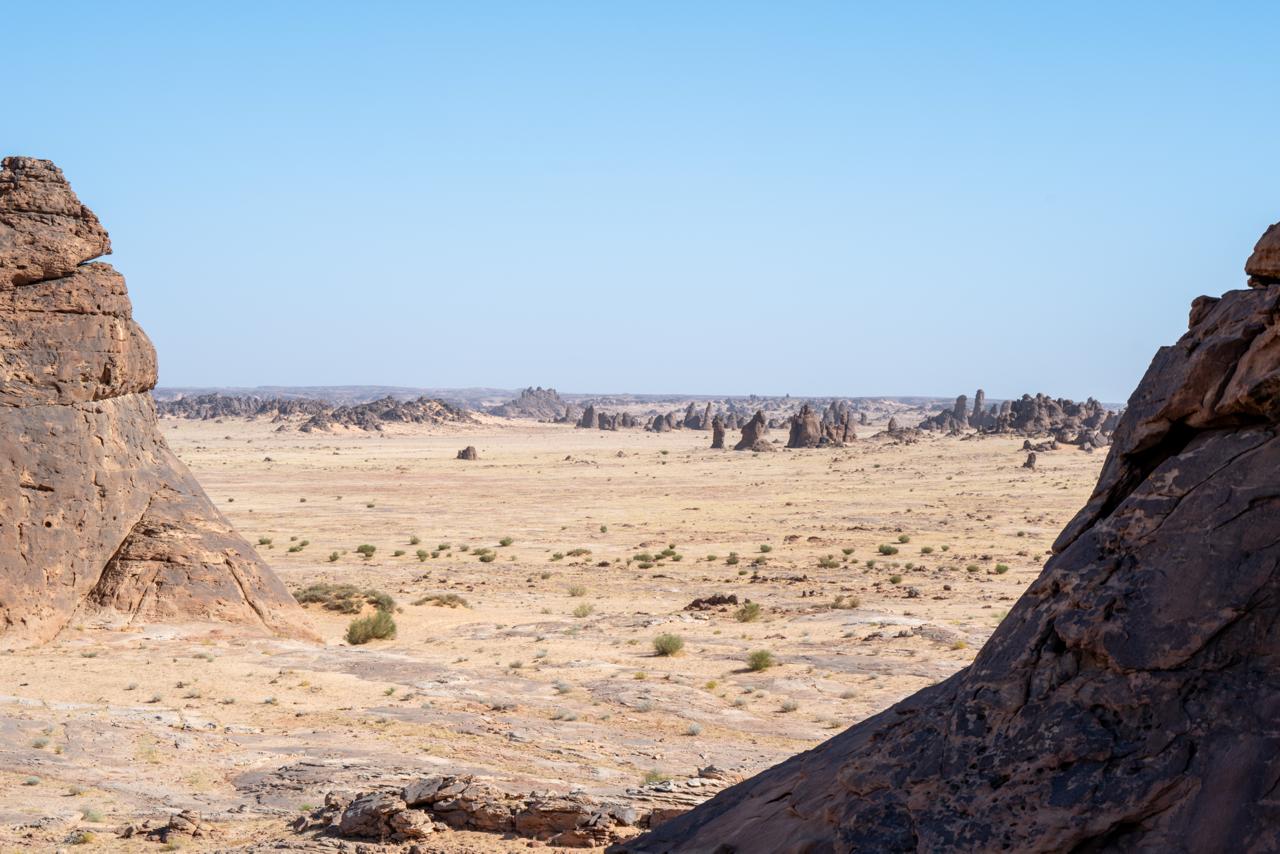
The discovery provides new scientific insights into the region's natural history, with fossils found in the Al-Ghramil Reserve in Al-Ula. The fossils date back to the Middle Ordovician period, approximately 485-444 million years ago, making them among the oldest known horseshoe crab fossils in the world.
The fossils are distinguished by their unusually large size compared to other species from the same period.
Remarkably, all specimens were found overturned, a preservation pattern not previously recorded, along with trace fossils indicating attempts by the organisms to return to their normal position.
The discovery offers a rare opportunity to document the behavior of ancient organisms and link it to contemporary biological knowledge, supporting advanced scientific studies.
It also provides a clear picture of Al-Ula's ancient environment, confirming it as a coastal region, and adds a new dimension to understanding the area's geological and environmental history.
The findings highlight the Royal Commission's capability to deliver accurate data that support scientific research and innovation in understanding Al-Ula's natural history.
The discovery reflects the Commission's commitment to scientific transformation, positioning Al-Ula as a global hub for scientific discoveries, geological research, international partnerships, and educational programs related to natural heritage, in line with Saudi Arabia's Vision 2030 objectives to strengthen knowledge in scientific and cultural fields. (end)
fn.aa