LOC14:53
11:53 GMT
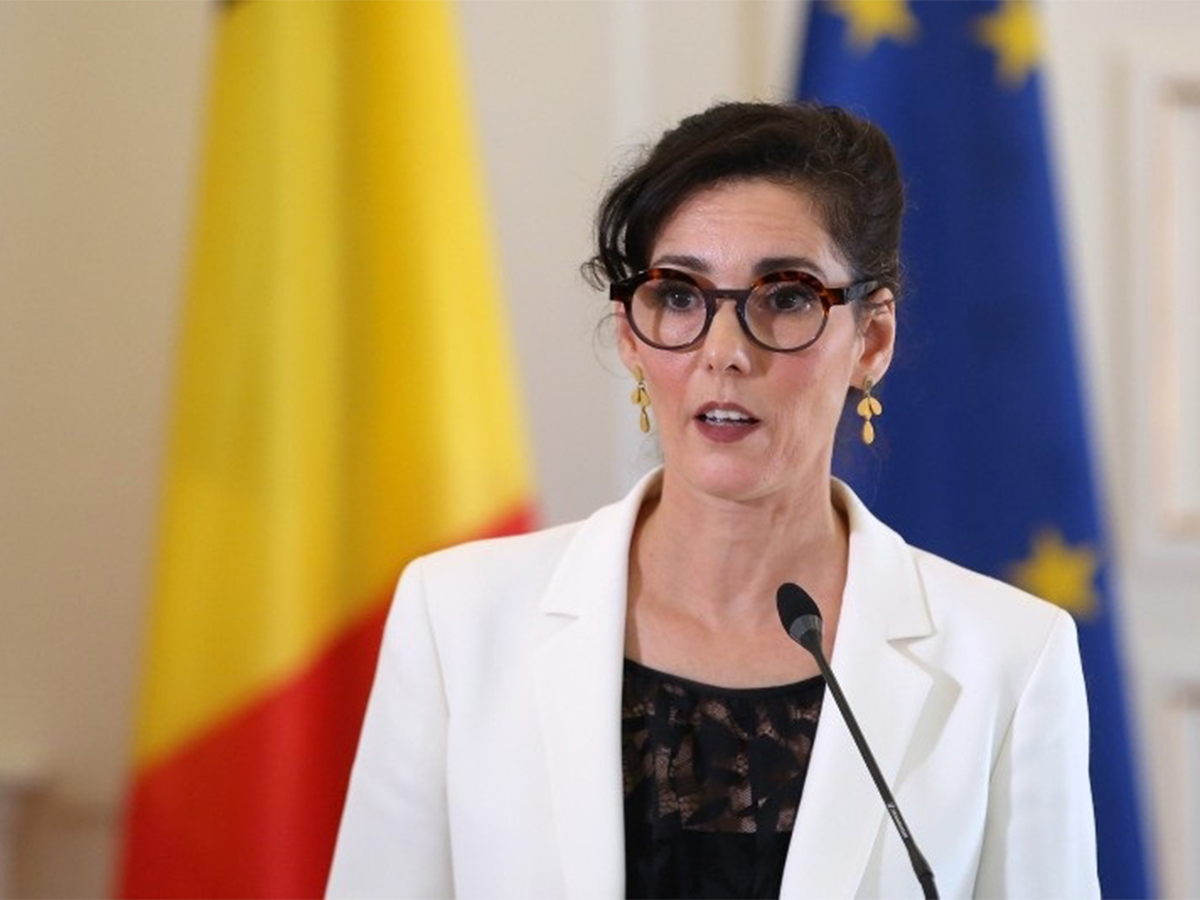 European Commissioner for Crisis Management Hadja Lahbib
BRUSSELS, July 9 (KUNA) -- European Commissioner for Crisis Management Hadja Lahbib announced Wednesday the launch of a new strategy aimed at strengthening the European Union (EU)'s readiness for emergencies and crises by developing strategic stockpiling systems and enhancing medical countermeasures.
Commissioner Lahbib said the new approach focuses on boosting Europe's preparedness through the stockpiling of essential goods such as food, medicine, water and fuel amid future threats and crises.
Speaking at the launch of the EU Stockpiling Strategy and the Medical Countermeasures Strategy, Lahbib stated, "What is our strongest natural defence? It is our immune system. Today we are boosting Europe's immune system with two new strategies on stockpiling and medical countermeasures."
Adding that they are aware of the threats they face that are not distant risks anymore, like hybrid attacks, power blackouts, extreme weather, and spreading diseases, which is why they are preparing themselves as a frontline defence.
She continued, "The takeaway is simple: the more we prepare, the less we panic. You don't wait for a car accident to put on your seatbelt. Wearing your seatbelt you have a sense of security. If you know your car has airbags, you feel even more protected in case of an accident."
Lahbib noted that the Stockpiling Strategy is the first of its kind at EU level, marking "the first time we are taking a truly European approach to stockpiling" in order to ensure that "the essential supplies that keep our societies running especially the ones that save lives are always available."
She emphasized that this will be achieved through smarter planning, stronger cooperation, sharing responsibility for collective safety, and being less fragmented and less reactive.
The strategy covers every step in the stockpiling cycle, starting with anticipating risks and identifying where gaps are, then combining resources.
Lahbib also underlined the importance of boosting civil-military cooperation for faster logistics and response, citing past successes during COVID-19 and climate-related disasters, while calling for deeper involvement from the private sector to secure vital supplies.
She announced the creation of a new EU Stockpiling Network, which brings together "all national stockpiling authorities across the EU to coordinate better, learn from each other and to build the trust we need in a crisis."
Adding that trust is super glue that holds everything together, and transparency helps to see clearly.
On the Medical Countermeasures Strategy, Lahbib said, "Medical countermeasures must be a top priority. That is why this is the first concrete deliverable of our Stockpiling Strategy."
Explaining that the Medical Countermeasures Strategy takes a comprehensive, end-to-end approach to protecting people's health, identifying threats, supporting innovation, scaling up production and ensuring access when it matters most.
To improve early detection of disease outbreaks, she announced a new EU Wastewater Sentinel System that will act "like an early warning radar, detecting infectious diseases before symptoms appear."
She also launched the Medical Countermeasures Accelerator to support innovation and "shorten the wait as much as possible" for vaccines and treatments in future emergencies.
Lahbib stated that the EU would expand its support for small and medium-sized enterprises through HERA Invest, raising its budget to EUR 200 million by 2027.
She cited the 2024 Paris Olympics as a recent success in strategic preparedness, with prepositioned medical kits and mobile detection tools enhancing the host country's emergency capacity. (end)
arn.res