Date : 22/02/2026
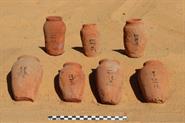
CAIRO, Feb 22 (KUNA) -- Egypt's Ministry of Tourism and Antiquities announced the discovery of a group of rock-cut tombs dating back to the Old Kingdom, containing burial shafts and chambers, during the current excavation season by a mission at Qubbet Al-Hawa in Aswan, southern Egypt.
In a statement on Sunday, Egypt's Minister of Tourism and Antiquities Sherif Fathy commended the work of archaeological missions, especially Egyptian teams, whose recent finds have enriched the field and boosted the appeal of cultural tourism among fans of ancient Egyptian civilization worldwide.
He underlined continued technical and logistical support to help uncover more secrets of Egypt's heritage and strengthen its position on the global cultural tourism map.
Meanwhile, Supreme Council of Antiquities (SCA) Secretary General Dr. Hisham Al-Leithy said the discovery adds to the importance of Qubbet Al-Hawa (Dome of the Wind) and understanding of the site, noting the tombs date to the Old Kingdom and were later reused during the First Intermediate Period and the Middle Kingdom of Egypt, reflecting the site's significance across eras.
In addition, Mohammad Abdel-Badi, head of the Egyptian Antiquities Sector, said the mission also uncovered two burial chambers containing about 160 pottery vessels of various sizes and shapes from the Old Kingdom, most in good condition and bearing Hieratic inscriptions.
Initial studies suggest they were used for storing liquids and grains, he added.
Artifacts from the Middle Kingdom was also found in the outer courtyard, including bronze mirrors, alabaster kohl containers, bead necklaces in different colors and shapes, and various amulets, he mentioned.
The mission continues work at the site to reveal more tombs and artifacts, he pointed out.
Qubbet Al-Hawa contains tombs spanning multiple eras, from the Old Kingdom through the Greco-Roman period. (end)
asm.lr