Date : 16/12/2025
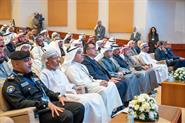
KUWAIT, Dec 16 (KUNA) -- Kuwait Institute for Scientific Research (KISR) Director General Dr. Faisal Al-Hamidan on Tuesday said artificial intelligence (AI) has become a pivotal tool capable of transforming water challenges into promising opportunities and turning data into accurate decisions that support resource sustainability.
Al-Hamidan made the remarks in a speech delivered on behalf of the patron, Minister of Higher Education and Scientific Research and Chairman of KISR's Board of Trustees Dr. Nader Al-Jalal, at the opening of a two-day regional workshop titled "Artificial Intelligence for the Sustainable Management of Water Resources in Gulf Cooperation Council (GCC) Countries," organized by KISR.
Science and innovation are the gateway to the future, he said, noting AI has become among the key tools in water resource management due to its exceptional ability to collect and analyze data and accurately predict future changes.
Al-Hamidan pointed to challenges facing the region, including scarce natural water resources, fluctuating rainfall and growing demand driven by population growth and expanding development activities, stressing that deploying modern technologies opens new horizons for innovative solutions that improve operational efficiency and advance planning mechanisms to bolster water security.
The workshop reflects KISR's commitment to adopting cutting-edge global technologies and enhancing national capabilities, he added, emphasizing that AI is no longer merely a technical option, but a key factor in building smart water systems able to adapt to climatic and environmental shifts.
Al-Hamidan voiced confidence that the sessions will address key issues, including national AI readiness, digital sovereignty, data security and smart modeling, leading to sustainable applications and community awareness, contributing to innovative ideas and practical strategies.
In similar remarks, GCC General Secretariat Representative Dr. Mohammad Al-Rashidi said water is among the most strategic priority files for GCC states, given its direct link to water and food security and the requirements of sustainable development.
GCC states have set a clear roadmap to strengthen joint action, culminating in the Gulf Water Strategy prepared in 2016 and updated this year to reflect regional and international developments, he said.
Al-Rashidi noted the General Secretariat's interest in leveraging modern technologies, foremost AI applications, as tools to raise efficiency of water resource management, improve strategic planning, support decision-making, enhance predictive capabilities and manage risks.
AI is among the most important enablers capable of driving a qualitative shift in the water sector by improving operational efficiency, reducing losses and enhancing network management in line with sustainable development goals, particularly Goal 6 on clean water and sanitation, he mentioned.
Meanwhile, Gulf Water Science and Technology Association Chairman Engineer Hamad Al-Hatmi said the workshop builds on the outcomes of the 15th Gulf Water Conference held in Doha in April 2024, and that its outputs will serve as input for the 16th Gulf Water Conference scheduled to be held in the Sultanate of Oman in 2026.
GCC countries face growing challenges in agriculture and urban growth due to increased demand for limited renewable freshwater, Al-Hatmi pointed out, noting these challenges are pushing toward a new approach based on digital transformation.
He reviewed key AI applications for the future of the water sector, including predictive analytics for early leak detection, improving desalination and distribution efficiency, demand management, reducing losses and supporting strategies to protect water quality.
The workshop will focus on vital themes such as the water sector's readiness for AI, its applications across municipal and agricultural water supply chains, desalination and wastewater treatment, as well as modern smart-city practices and forecasting droughts and floods through early warning systems, Al-Hatmi explained.
In his remarks, Secretary General of the Arab Union of Scientific Research Councils Professor Dr. Abdulmajid Bin Amara said the meeting brings together leading scientists to explore how AI can improve water management through big data analysis and precise forecasting.
The Union places strong emphasis on water and AI within the Arab Alliances for Scientific Research and Innovation initiative, he said, describing it as the first joint cooperation initiative among researchers in Arab countries.
Bin Amara called on research institutions and researchers to submit their projects for the initiative's second edition, launched in mid- last month, praising Kuwait's role through KISR in supporting the Union's programs and initiatives serving Arab development goals.
Meanwhile, Head of the Workshop's Organizing Committee Dr. Mohammad Al-Rashed said in a press statement the workshop aims to introduce relevant entities to practical AI tools for water management and showcase successful models of AI applications in the water sector.
The workshop seeks to enhance cooperation among policymakers, researchers and industry leaders and develop practical strategies to integrate AI into water-management systems in GCC countries, Al-Rashed said.
He expressed thanks and appreciation to participating entities and speakers, commending the research and ideas presented, and underlining that AI is a strategic tool essential to ensuring sustainable water resources and strengthening water security in GCC countries.
The workshop, organized by KISR in cooperation with the GCC General Secretariat, the Gulf Water Science and Technology Association and the Arab Union of Scientific Research Councils, aims to exchange knowledge, formulate actionable strategies and enhance partnerships between researchers and decision-makers to ensure a safe and sustainable water future in the region. (end)
oys.lr