Date : 10/12/2025
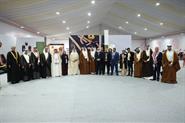
NEW DELHI, Dec 10 (KUNA) -- The UN Educational, Scientific and Cultural Organization (UNESCO) on Wednesday inscribed "Bisht: Skills and Practices" as a joint Arab element on the Representative List of the Intangible Cultural Heritage of Humanity.
The nomination was led by the State of Qatar with the participation of Kuwait, other Gulf Cooperation Council countries, Jordan, Iraq, and Syria.
The announcement was made during the 20th session of the Intergovernmental Committee for the Safeguarding of the Intangible Cultural Heritage, held in New Delhi from December 8 to 13.
Kuwait's delegation was headed by Acting Assistant Secretary-General for Antiquities and Museums at the National Council for Culture, Arts and Letters (NCCAL), Mohammad bin Reda, who participated in the committee sessions and meetings.
The inscription of the bisht reflects Arab cooperation in preparing the nomination and highlights the shared cultural heritage of the participating countries, as well as their commitment to safeguarding it for future generations.
The bisht is traditionally worn during national, official, and social occasions, and showcases precise hand-sewing and traditional embroidery passed down through generations.
Kuwait has previously inscribed six cultural elements on UNESCO's Representative List of Intangible Cultural Heritage: henna (2024), date palms (2022), the Sadu educational program (2022), Arabic calligraphy (2021), and traditional Sadu weaving (2020).
Through these inscriptions, Kuwait affirms its commitment to its cultural strategy, promoting national identity, safeguarding intangible heritage, supporting international cooperation, sharing expertise, and highlighting its cultural role globally.
The Kuwaiti delegation also included Al-Anoud Al-Khamis and Fajr Al-Haddad from NCCAL's Antiquities and Museums Department, and Maseera Al-Enzi representing the Sadu House, who participated in committee discussions and activities. (end)
atk.seo