التاريخ : 08/12/2025
By Yousef Al-Tattan
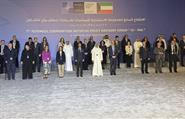
KUWAIT, Dec 8 (KUNA) -- Kuwaiti Deputy Minister of Foreign Affairs Ambassador Sheikh Jarrah Jaber Al-Ahmad Al-Sabah affirmed Monday Kuwait's hosting of the seventh meeting of the Istanbul Cooperation Initiative Policy Advisory Group (ICI-PAAC) reflects firm commitment to backing constructive dialogue, promoting multilateral cooperation and maintaining regional security.
In the opening speech of the two-day meeting, attended by representatives from NATOآ’s 32 Allies and partner countries from the Gulf, Sheikh Jarrah welcomed participants to Kuwait, expressing appreciation to all partner countries, experts, and delegations whose presence reflects a shared commitment to constructive dialogue, enhanced cooperation, and strengthened collective security.
He highlighted the significance of hosting the meeting at the NATO-ICI Regional Centre in Kuwait, the only NATO-affiliated facility of its kind outside NATO territory, describing it as a testament to the depth of Kuwaitآ’s partnership with NATO and to its pivotal role in promoting meaningful engagement between the Alliance and the region.
Ambassador Sheikh Jarrah noted that Kuwait is honored to host the ICI meeting for the third time, reaffirming the countryآ’s steadfast commitment to multilateral cooperation and regional security.
This yearآ’s meeting, he added, carries additional importance as the first to be hosted by the Ministry of Foreign Affairs which is a step that reflects Kuwaitآ’s dedication to strengthening diplomatic engagement, enhancing institutional coordination, and advancing shared strategic objectives with NATO and regional partners.
He emphasized that the theme of this yearآ’s meeting, cybersecurity governance and the implications of artificial intelligence for regional and global stability, reflects pressing priorities that require comprehensive and forward-looking dialogue.
The discussions, he said, will cover a wide range of issues, including the evolution of ICI cooperation, political and security developments in the region, shared strategic priorities, cyber risks, emerging threats posed by AI, and cooperation in addressing transnational challenges.
Ambassador Sheikh Jarrah stressed that in an era of rapidly shifting geopolitical dynamics and increasingly complex security threats, the value of the Istanbul Cooperation Initiative becomes even more apparent.
The platform, he noted, has served as an effective forum for strategic dialogue and practical collaboration in fields such as maritime security, counterterrorism, cyber resilience, and emerging technologies.
Speaking to Kuwait News Agency (KUNA), Special Representative for the Southern Neighbourhood Javier Colomina affirmed that the seventh meeting of the Istanbul Cooperation Initiative Policy Advisory Group (ICI-PAAC), held in Kuwait, comes at a crucial moment for regional and international security.
Colomina said that the meeting, which brings together NATOآ’s 32 Allies and partner countries from the Gulf, provides an important platform to review shared priorities, explore opportunities for cooperation, and address the growing range of challenges affecting both regions.
He described the current environment as "the most unstable security context in decades", citing persistent instability in the Middle East, and ongoing tensions in Lebanon, Syria, and the Red Sea.
He welcomed the recent positive developments related to ceasefire efforts, made possible through the mediation of the United States, Turkiye, Qatar, Egypt, and Kuwait, but underscored that significant challenges remain.
"No nation or region can address these challenges alone," he said.
He stressed that the Gulf region has become more prominent than ever, noting its leadership in mediation, innovation, counterterrorism, maritime security, and in safeguarding food and energy security.
He also highlighted the strong economic and investment ties between the Gulf and Europe, describing the region as "a go-to partner whose role is essential in todayآ’s increasingly complex world."
Colomina underscored the deep interconnection between Euro-Atlantic and Gulf security, pointing to examples such as the use of Iranian-manufactured drones in Ukraine, the activities of competing strategic actors, and the global repercussions of the war on food and energy markets.
"These developments clearly demonstrate how closely intertwined our security environments have become," he said.
Speaking about the NATO-ICI Regional Centre in Kuwait, Colomina emphasized its strategic importance, noting that it is the only NATO training and education facility in the entire southern neighbourhood.
"This Centre has always been important, but it must become even more relevant," he said, explaining that although more than 35 activities were carried out last year, the Centre holds even greater potential to support cooperation in cybersecurity, maritime security, counterterrorism, innovation, and emerging technologies.
He added that the Centre is uniquely positioned to help elevate NATOآ’s cooperation with the Gulf and wider region and could become a flagship institution for dialogue, capacity-building, and advanced defence cooperation.
Looking ahead to the outcomes of the meeting, Colomina said he is optimistic but stressed the need for concrete results.
"Dialogue is essential, but today we must be as practical and goal-oriented as possible," he stated. "We need to translate these discussions into specific projects and a clear roadmap that strengthens cooperation across the priority areas our experts will address."
Colomina concluded by expressing appreciation to the State of Kuwait for hosting the meeting and for its longstanding support to ICI, affirming NATOآ’s strong commitment to deepening cooperation with Gulf partners to enhance regional stability, promote dialogue, and reinforce shared security. (end)
yt.mt