LOC12:41
09:41 GMT
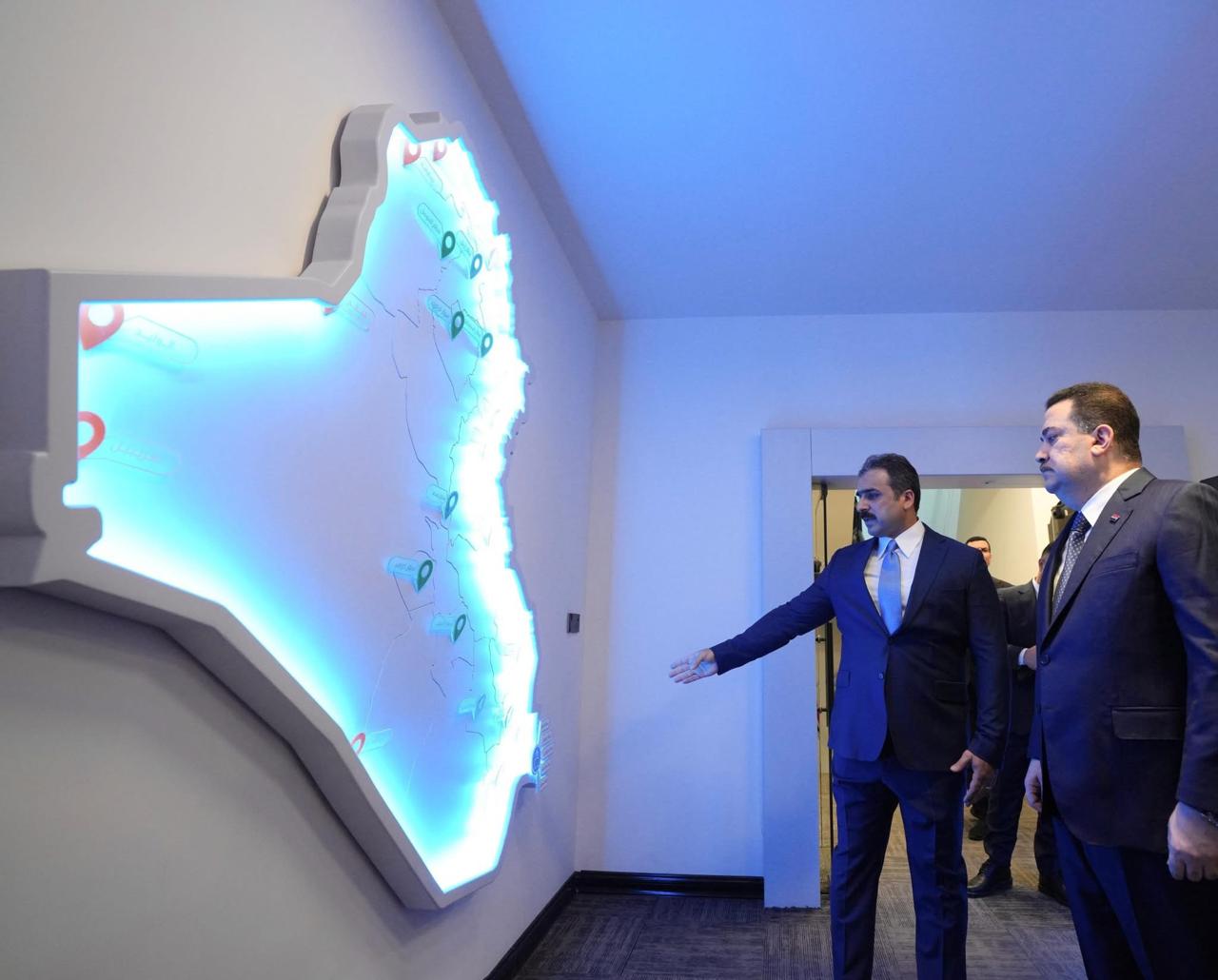 Iraqi Prime Minister views a model of Iraqi border crossings
News report by Alaa Al-Huwaijel
BAGHDAD, Jan 11 (KUNA) -- As Iraqis await government formation after the November 11 elections, caretaker Prime Minister Mohammad Shia' Al-Sudani imposed rapid austerity measures, prompting mixed reactions and conflicting economic assessments, despite Iraq holding the world's fourth largest oil reserves and being the Organization of the Petroleum Exporting Countries' (OPEC) second largest producer.
In recent days, public attention has shifted from security, counterterrorism, and political rivalry to the economy, taxes, and fiscal policy.
Media and social platforms have been flooded with complaints about unexpected and uneven increases in water and electricity bills, fees, and taxes.
Contractors protested over delayed payments and their union threatened legal action, while government employees reported delays of several days in receiving monthly salaries.
Traders also criticized higher customs tariffs introduced at the start of this month on a wide range of goods and services, including medicines, as the Iraqi Pharmacists Syndicate said drug tariffs jumped tenfold.
Meanwhile, Imad Al-Rishawi, mayor of Rutba district in Anbar province, stated in a press release that the new tariffs almost halted trade with Jordan through the Trebil crossing, with incoming trucks falling to about 10 per day from more than 200 previously.
These developments reflect the scale of Iraq's current financial strain, driven by oil price volatility - oil revenues make up about 92 percent of the state budget's resources - and by rising public obligations, especially wages, pensions, and social welfare payments, estimated at around 9 trillion Iraqi dinars per month (about USD 6.8 billion).
To contain the crisis, Al-Sudani's caretaker government adopted stricter economic policies and held four meetings of the Ministerial Council for the Economy in less than a month (from December 15 to January 5) to explore ways to curb spending and increase revenues.
On December 18, Al-Sudani chaired a meeting on implementing comprehensive tax governance, ordering an evaluation and restructuring of tax administration systems to boost non-oil income.
Starting January 1, Iraq applied new customs tariffs, raising duties on imported goods by between 5 and 30 percent, according to Iraqi customs officials to the Iraqi News Agency (INA).
In mid-December, it also imposed a 20 percent tax on mobile recharge cards and internet services under Cabinet Decision 1083 of 2025.
However, the recent economic steps have drawn criticism from members of the newly elected parliament, which is expected to vote on a new government within weeks - and Al-Sudani himself may be a candidate to lead it.
Additionally, Member of Parliament (MP) Mona Al-Ghurabi, from the State of Law Coalition, said the caretaker government's measures lack legal and constitutional basis, arguing that only parliament has the authority to impose or amend taxes and fees under the constitution.
She said lawmakers would oppose what she called government "confusion" that adds financial burdens on citizens.
By contrast, some financial and economic specialists commended the measures and downplayed their negative impact, arguing they are part of a longer process aimed at confronting structural problems and boosting non-oil revenues.
Speaking to KUNA, Iraqi Economist Mahmoud Dagher said the decisions were not rushed, but the result of lengthy discussions, and said the next government should stick with them because Iraq cannot exit the current crisis while remaining dependent on oil.
He added that while the steps may work in the short-term, medium and long-term reforms are needed to diversify the economy and build new sources of value beyond oil.
The measures also align with recommendations made by the International Monetary Fund (IMF) after a mission to Iraq, which highlighted major weaknesses: non-oil growth slowed to 2.5 percent in 2024 from 13.8 percent the year before, while the overall fiscal deficit rose to 4.2 percent of Gross Domestic Product (GDP) from 1.1 percent.
IMF linked growing vulnerabilities to an expanded public wage bill and hiring policies that increased dependence on oil, raising the oil price needed to balance the budget to about USD 84 per barrel in 2024, up from USD 54 in 2020.
IMF advised Iraq to review spending plans, cut or delay non-essential expenditures, reassess customs fees, introduce or raise selective consumption taxes, and avoid monetary financing of the deficit due to inflation and reserve risks.
It also urged gradual personal income tax reform by reducing exemptions and strengthening tax administration, controlling spending by reforming the wage bill and limiting mandatory hiring, and tackling financial and administrative corruption by strengthening anti-corruption strategy, aligning it with international standards, and reinforcing judicial independence. (end)
ahh.lr