LOC21:51
18:51 GMT
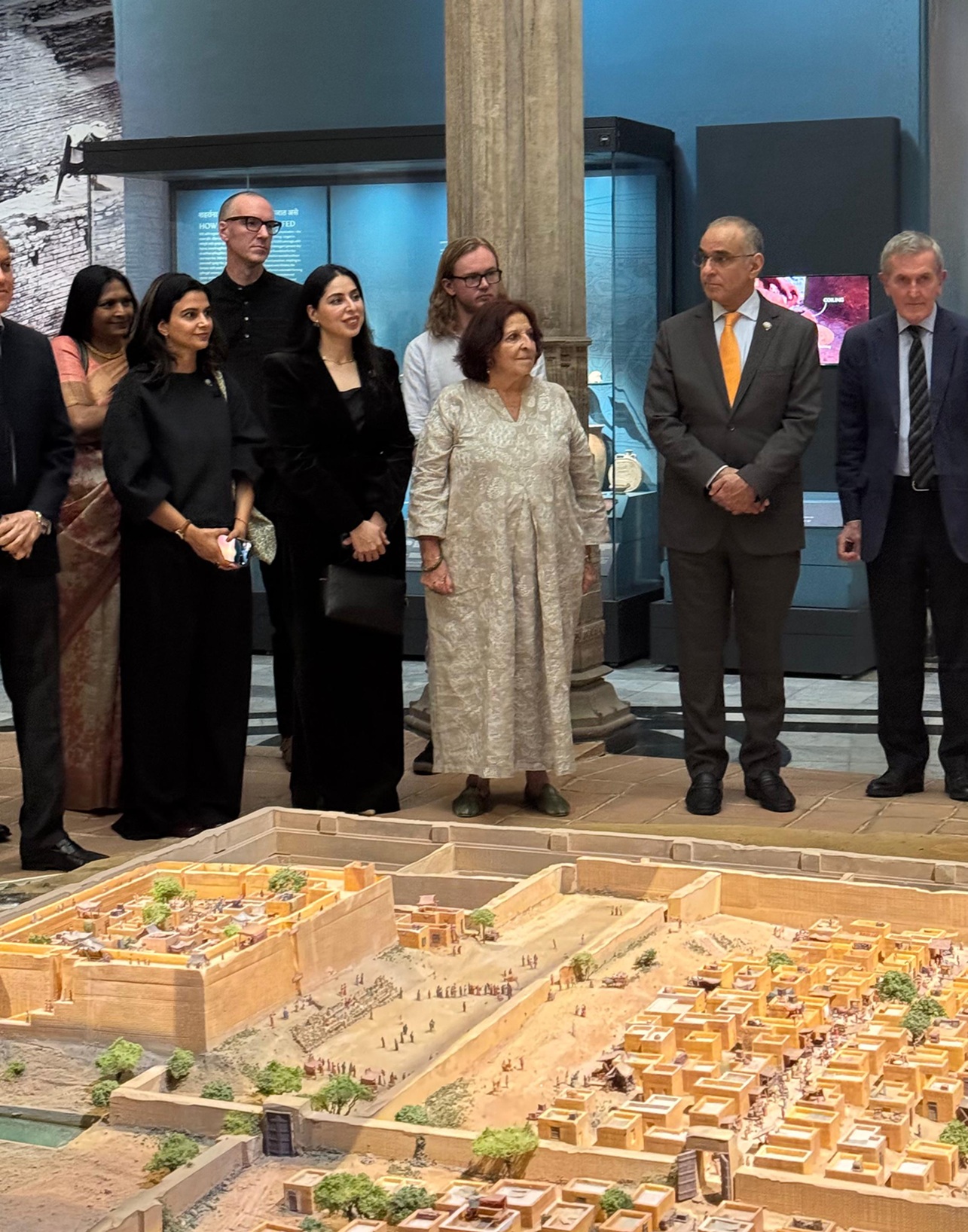 A delegation from the Dar al-Athar al-Islamiyyah and the Al-Sabah Archaeological Group during the opening of the gallery
NEW DELHI, Dec 12 (KUNA) -- The Al-Sabah Archaeological Collection under the Dar al-Athar Al-Islamiyah in Kuwait participated on Friday in the opening ceremony of the "Networks of the Past" gallery.
The gallery, called a "Study Gallery of India and the Ancient World" organized by the Chhatrapati Shivaji Museum of Maharajah Vastu Sangrahalaya in Indian city of Mumbai.
In a statement to KUNA, on the occasion Secretary-General of the National Council for Culture, Arts and Letters Dr. Mohammed Khaled Al-Jassar, who is heading the Kuwait team said, "the National Council is proud to support the Dar al-Athar Al-Islamiyah which serves as an ambassador for Kuwait cultural diplomacy globally.
We also appreciate the Minister of Information and Culture, Abdulrahman Al-Mutairi for supporting this heritage, which represents Kuwait's cultural identity and human beauty.
The participation of the Al-Sabah Collection has received unique global recognition due to its significant artistic and historical value. We extend our thanks to Dar al-Athar Al-Islamiyah and to its Director General Sheikha Hessa Sabah Al-Salem for making these rare treasures available to share with major international museums."
The exhibition is part of a global cultural initiative coming as a result of years of collaboration between major international museums, aiming to reinterpret human history from a perspective that highlights the interconnectedness of civilizations across the ages.
Apart from Dr. Mohammed Khaled Al-Jassar who is heading the Kuwait team on behalf of Minister of Information and Culture Minister of State for Youth Affairs, Abdulrahman Al-Mutairi, Consul General of the State of Kuwait in Mumbai Emad Abdulaziz Al-Kharraz, Director of the Al-Sabah Archaeological Collection Salam Qawqji and an official delegation from Dar Al-Athar Al-Islamiyah, and the Al-Sabah Archaeological Collection were also present.
This participation underscores Kuwait's prominent position on the global cultural scene.
This exhibition, highlighting pivotal moments in the development of human civilization, offers a fresh educational and cultural perspective, beginning with the Indus Valley Civilization (Harappan), continuing through the ancient states of Egypt, Greece, and China, and culminating in the cultural interactions that shaped the ancient world.
The Al-Sabah Archaeological Collection is a major contributor to this project. The exhibition's official video describes Kuwait's participation as part of a network of partnerships extending to the British Museum, the Berlin Museums, the Rietberg Museum in Zurich, and other international institutions.
The collaboration spanning more than four years was instrumental in bringing the exhibition to its current form.
This participation received special attention from Director General of the Dar Al-Athar Al-Islamiyah and co-owner of the Al-Sabah Archaeological Collection Sheikha Hessa Sabah Al-Salem Al-Sabah appreciated participation in the event in Mumbai.
She emphasized the importance of establishing a global presence, reflecting the vision and mission of her late husband, Sheikh Nasser Sabah Al-Ahmad Al-Sabah, who held a clear vision aimed at disseminating beauty, art, history, and human heritage to the world.
Kuwait's contribution to this exhibition is highlighted by the loan of eleven rare artifacts from the Al-Sabah Collection, considered among the most important material evidence of cultural exchange in the ancient world.
These pieces represent civilizations spanning from the Iranian Plateau to the Oxus Valley and the Hellenistic world, thus reinforcing the exhibition's message of cultural interconnectedness of peoples.
Among the artifacts on loan from the Al-Sabah Archaeological Collection to the exhibition are a gilded tablet from the Oxus Valley civilization dating back to the 4th century BC, and a silver dish with a gilt center from the Eastern Hellenistic period (3rd-2nd centuries BC).
The collection also includes silver and glass vessels from eastern Iran dating from the 4th-3rd centuries BC and others from the 5th century AD.
The loan also includes pieces that exemplify the high artistic skill of craftsmen from the 2nd-3rd century BC.
These selected works offer visitors a rare opportunity to explore successive artistic periods, revealing the depth of Eastern civilizations and their connection to the ancient world.
The Kuwait delegation, headed by Al-Jassar and including the museum's curator and the director of the Al-Sabah Archaeological Collection Salam Qawqji, media supervisor at the National Council for Culture Shurooq Al-Qaffas, media officer for the Dar Al-Athar Al-Islamiyah Al-Jazi Al-Sanafi, researcher in Islamic history at the Dar Al-Athar Al-Islamiyah Dana Al-Mayyal, senior chemistry specialist responsible for assembling the artworks Abdulaziz Al-Duwaish will participate in a series of cultural and educational activities, including the opening of the Nalanda Learning Center, scientific and dialogue tours, and field visits.
The active engagements of Kuwait delegation will make Kuwait's presence an integral part of the joint international effort. (end)
atk.mb