LOC15:28
12:28 GMT
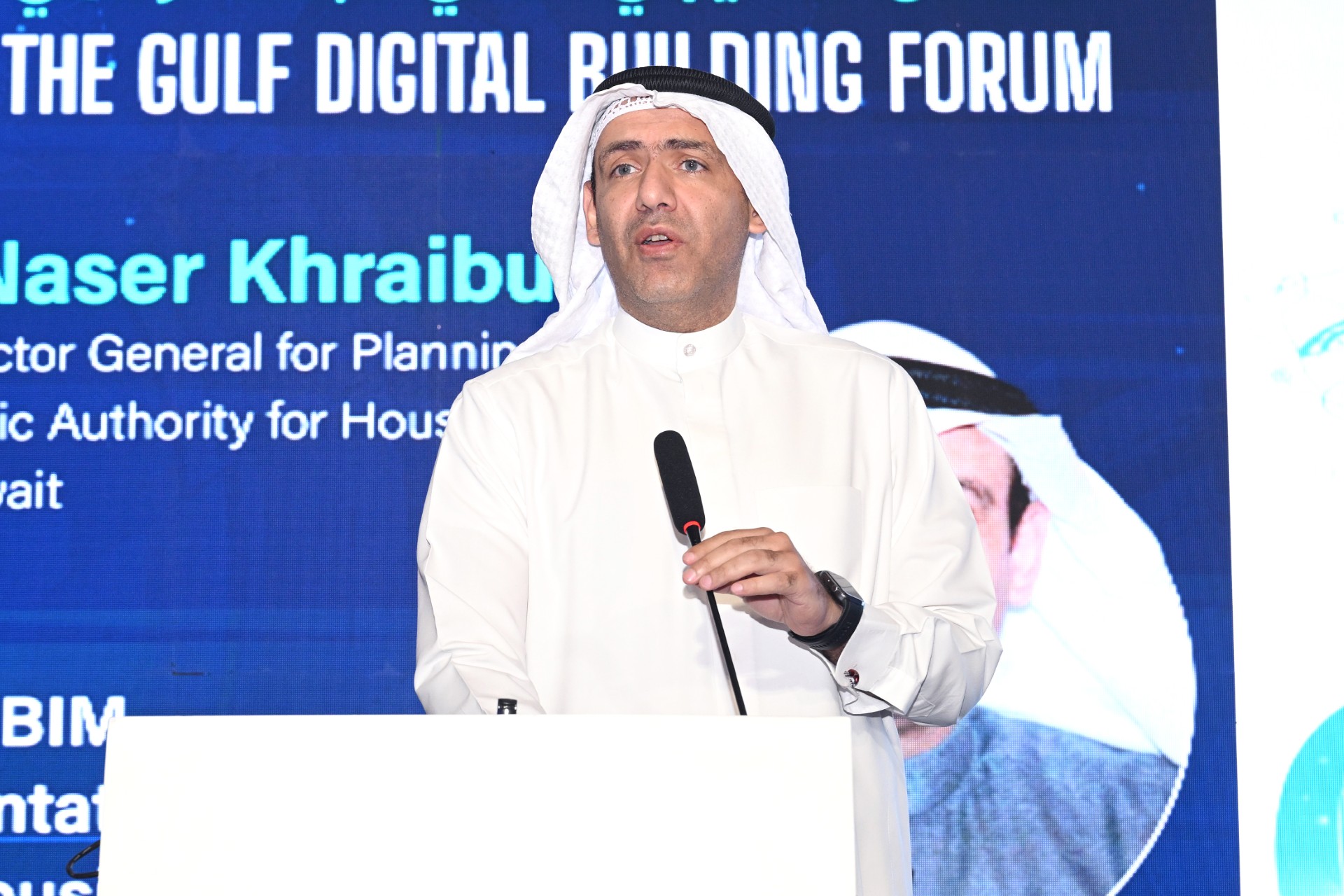 Deputy Director General for Planning and Design at PAHW Naser Khraibut
KUWAIT, Dec 8 (KUNA) -- Kuwait's Public Authority for Housing Welfare (PAHW) is pressing ahead with plans to expand construction of new cities and complete a full digital transformation in order to meet growing demand for housing and improve quality of life, Deputy Director General for Planning and Design at PAHW Naser Khraibut said Monday.
Speaking at the Gulf Digital Construction Forum 2025, organized by the Kuwait Society of Engineers' Union of Engineering Offices and Consulting Houses, he said in a speech that since the 1950s the government has been providing housing for citizens, and that Kuwaiti families become eligible to apply for a housing unit as soon as they marry.
He underlined that the goal is not just to build residential areas, but to create fully integrated communities.
The new cities are being designed as comprehensive urban environments that include schools, government services, commercial areas, health centers, and other essential facilities, he added.
As the population has grown, the government has moved toward developing large new cities, Khraibut pointed out.
There are currently around 70 construction contracts under way with a total value of about KD 2.8 billion (around USD 9 billion), which brings major challenges and makes it essential to use Building Information Modeling (BIM) to manage these large-scale projects efficiently, he mentioned.
Kuwait is now designing three major new cities that will provide about 170,000 housing units, effectively doubling the size of the country's urban areas, he said.
The biggest challenge, he explained, is the vast land allocated for each city - between 60 and 140 square kilometers - which will sharply increase demand for water and energy and bring other pressures.
This requires precise planning and systematic implementation to avoid serious problems in the future, he noted.
About 1,100 apartments have been completed so far, along with public facilities in the West Abdullah Al-Mubarak project, while some projects are still in the design phase, including one that will include 9,800 housing units, he added.
Khraibut also outlined three main directions for the digital transformation of housing projects.
The first is a Project Information Management System (PMIS) to replace traditional follow-up methods with a fully digital platform that allows real-time monitoring of project status, he mentioned
The second is a "digital twin" project that integrates BIM with geographic information systems (GIS), he explained.
The third is a Smart Cities Center that will use BIM outputs to operate and manage modern cities, he pointed out. (pickup previous)
mfs.aab.lr