LOC11:59
08:59 GMT
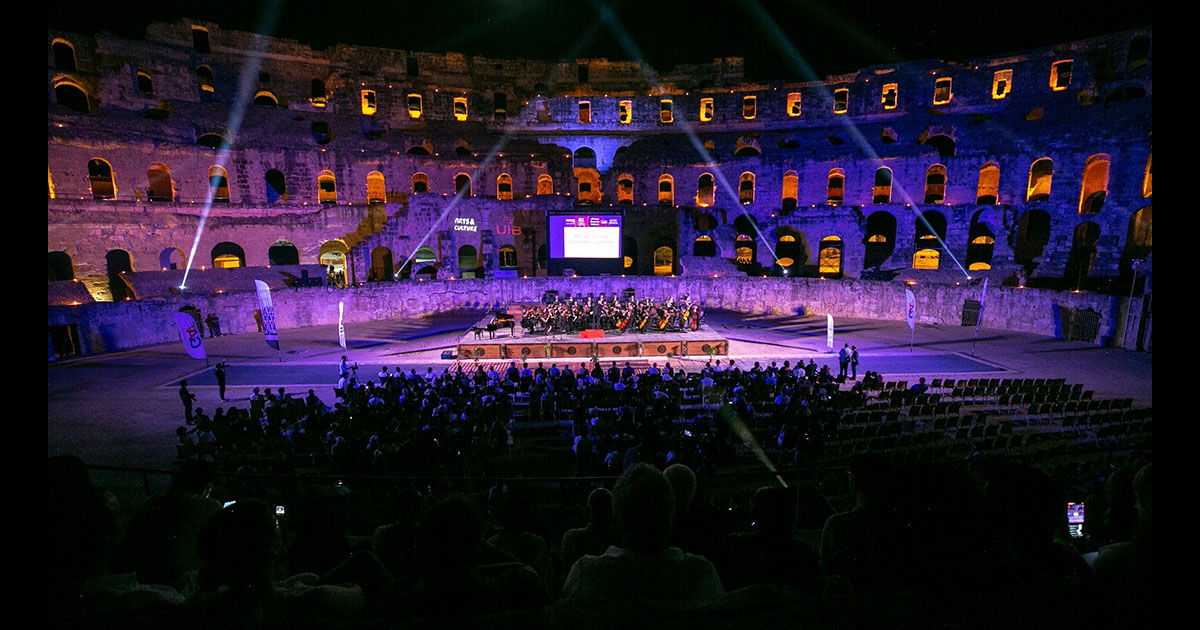 From the performances of the Vienna Symphony Orchestra
By: Shukri bin Mansour
TUNIS, June 2 (KUNA) -- With its unique architectural design, the El Djem Palace, which dates back to the year 238, continues to commemorate the legacy of one of the most important civilizations that passed through the land of Tunisia.
The palace, also known as the El Djem Colosseum, has been classified as one of the most beautiful architectural landmarks, particularly renowned for its mosaic art.
Its well-preserved structure and vast area have made it the third-largest Roman amphitheater in the world, after the Colosseum of Rome and the Colosseum of Capua in Italy. It is listed as a UNESCO World Heritage Site.
During the Roman era, the amphitheater served as an arena where gladiators mainly war captives faced wild beasts such as lions. It also hosted chariot races, with both the public and Roman nobility gathering to watch these spectacles.
Today, the amphitheater has become a destination for renowned international artists and musicians. It hosts annual festivals and concerts by major global ensembles, especially those performing symphonies and jazz music. (end)
sbm.onm